
Safety and Environmental Considerations
Advertisements
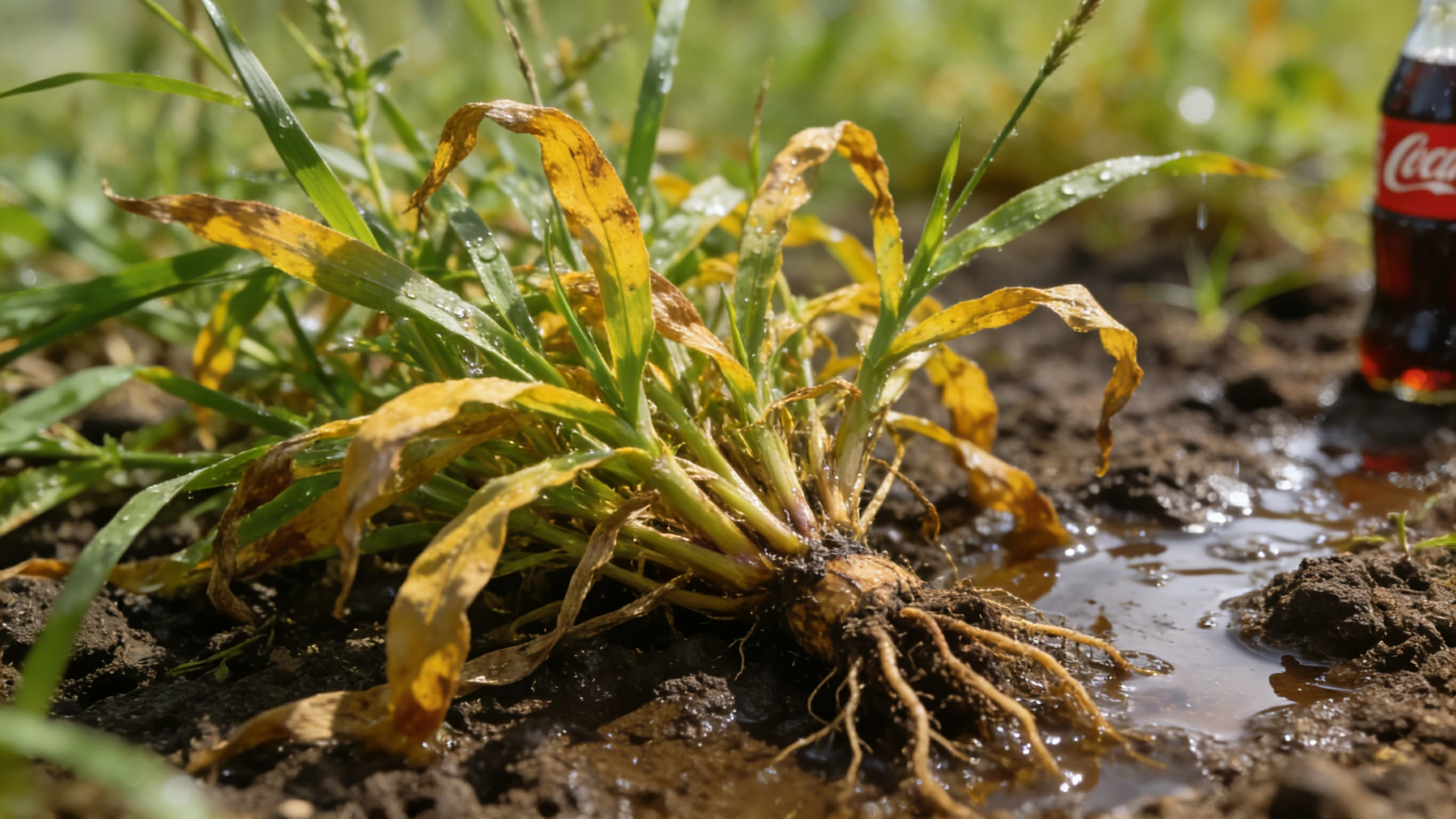
Using a food product as a pesticide introduces unique safety and environmental questions that must be seriously considered.
🐕 1. Pet and Wildlife Hazard
Sticky, sugary Coke pools can attract pets and wildlife. Ingestion of Coke treated with added salt or vinegar mixtures can be particularly harmful. The phosphoric acid and caffeine (present in small amounts) are also not beneficial for animals.
🌍 2. Soil Health Impact
Repeated applications can acidify a small patch of soil and disrupt the microbial balance due to the sugar rush and subsequent crash. This can make it difficult for any plant, desirable or not, to grow in that spot afterwards, potentially creating a dead patch.
🚰 3. Runoff and Water Systems
If used near drains or in areas where runoff enters waterways, the sugars and acids can contribute to water pollution. In water bodies, the decomposition of sugar consumes oxygen, which can harm aquatic life.
Practical Verdict: When (If Ever) to Use This Hack
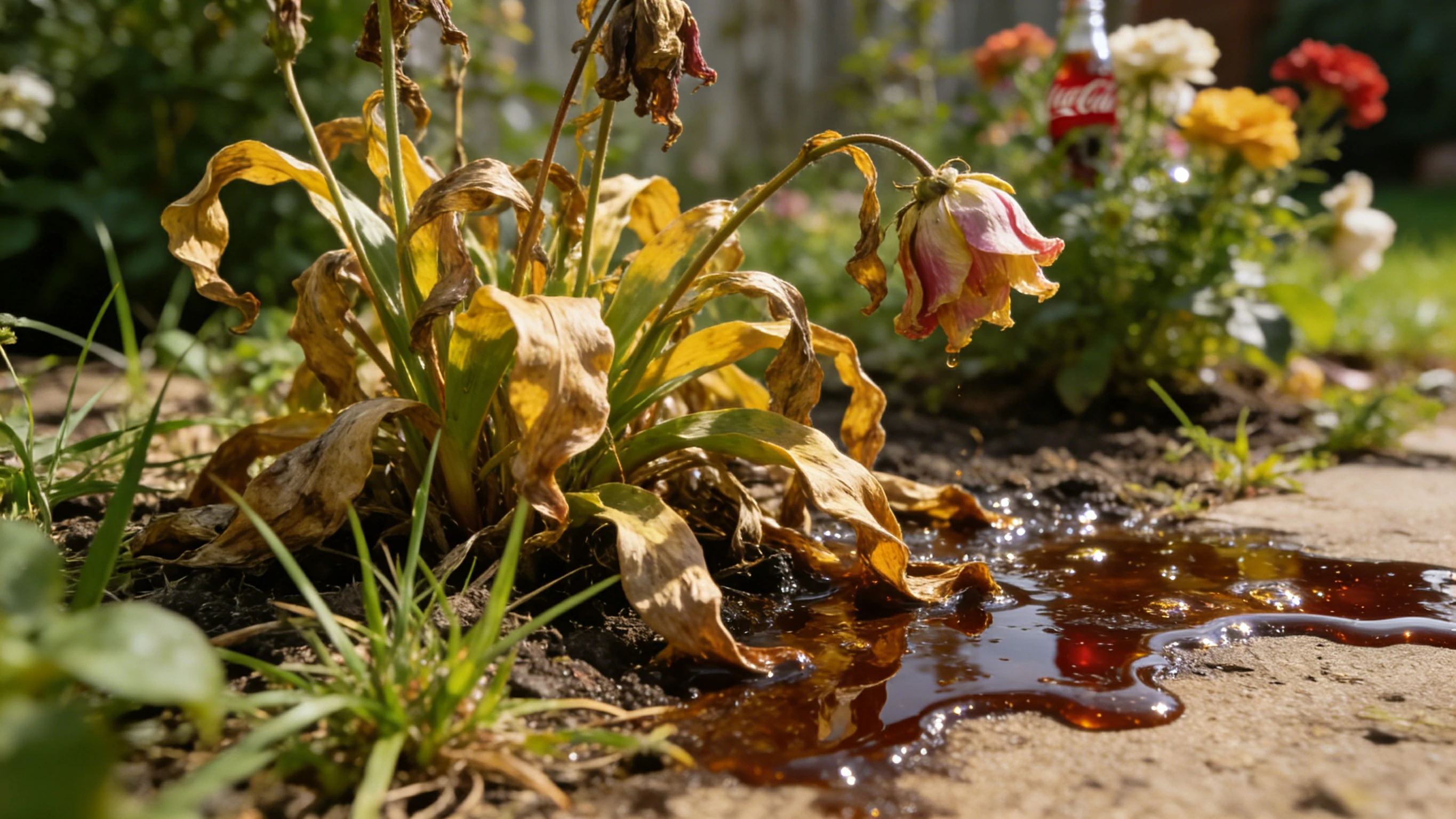
Given its drawbacks, the use of Coca-Cola as a weed killer is extremely niche. It may have a place only under very specific, limited circumstances.
✅ 1. Possible Niche Use-Case
It could be considered for a single, isolated weed growing in the center of a concrete driveway or a wide pavement crack, where there is absolutely no risk to other plants, soil, or wildlife, and where you have no other products on hand. Even then, boiling water or a manual pulling tool is often a better, cheaper, and less sticky solution.
❌ 2. Scenarios to Avoid
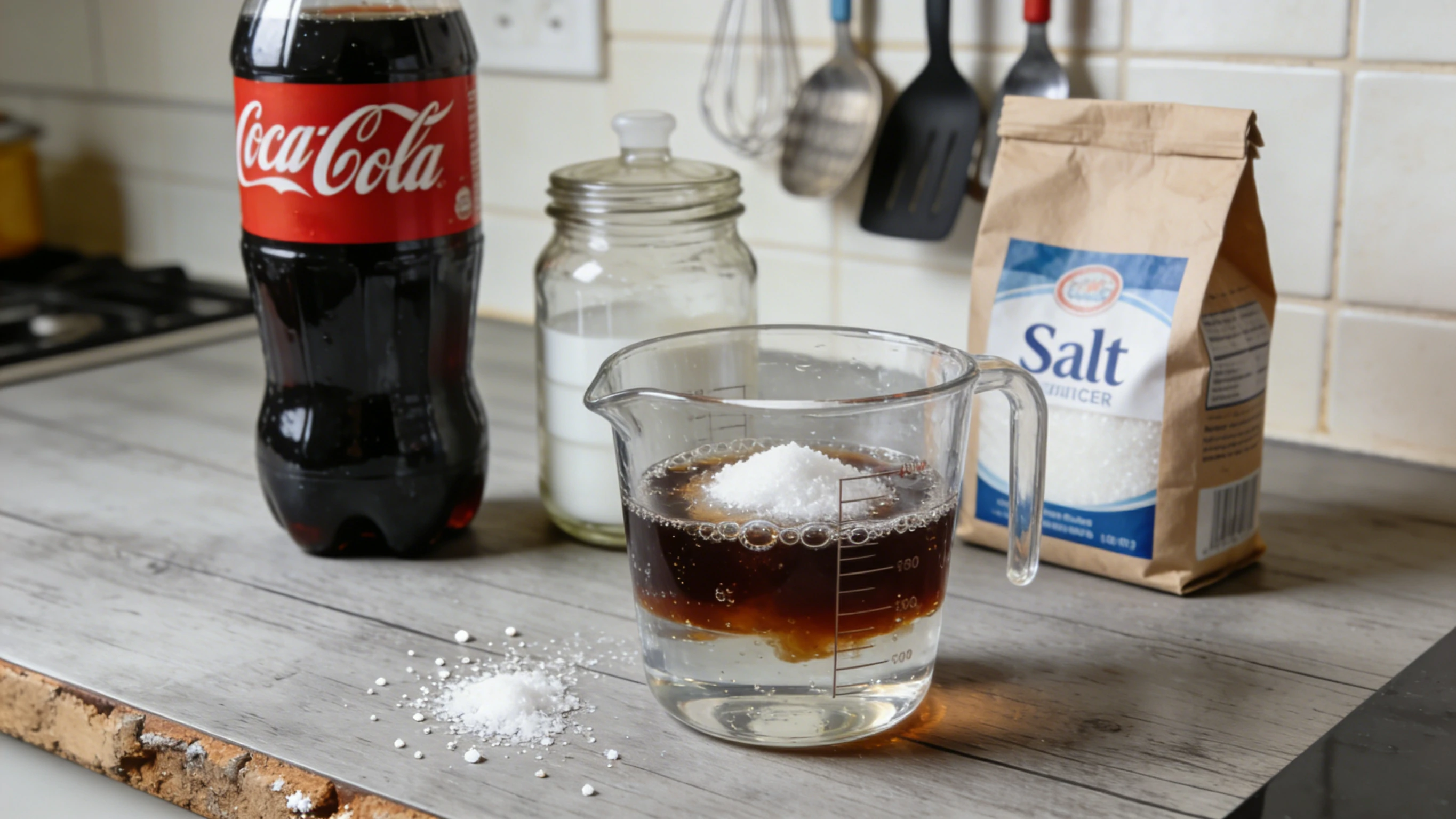
Never use Coca-Cola in garden beds, on lawns, near vegetable patches, or in areas frequented by pets. Avoid using the ""enhanced"" mixtures with salt near any soil you wish to remain fertile, as salt can cause long-term sterility.
🔍 3. Recommended Alternatives
For a more effective and less problematic DIY approach, consider: Boiling Water: Excellent for patio and driveway weeds, kills on contact. Vinegar Solution: Horticultural vinegar (20-30% acetic acid) is far more effective than household vinegar for weed control. Manual Removal: Using proper tools to remove the root is often the most sustainable solution. Smothering: Using cardboard or mulch to block sunlight.
Conclusion: A Sticky Situation with Limited Reward
The idea of Coca-Cola as a weed killer is rooted in its real chemical properties—acidity, sugar content, and osmotic potential—which can indeed cause harm to plant tissues. This transforms the garden hack from pure myth into a scientifically plausible, though highly flawed, method. However, its significant limitations as a non-selective, contact-only, and environmentally messy treatment outweigh its novelty. It attracts pests, harms soil biology, is inefficient for anything but the smallest tasks, and poses risks to pets and beneficial organisms. While an intriguing experiment for a single sidewalk weed, it falls short as a practical, reliable, or responsible gardening strategy. For the dedicated gardener, proven methods—whether manual, mulching, or using targeted, approved herbicides—offer far greater efficacy and environmental stewardship than dousing your garden in soda.
Advertisements
Advertisements
You May Have Missed

The waitress wrote a letter to her father without her mother's knowledge

The 10 riskiest dog breeds to keep at home