
Limitations and Drawbacks of the Coca-Cola Method
Advertisements
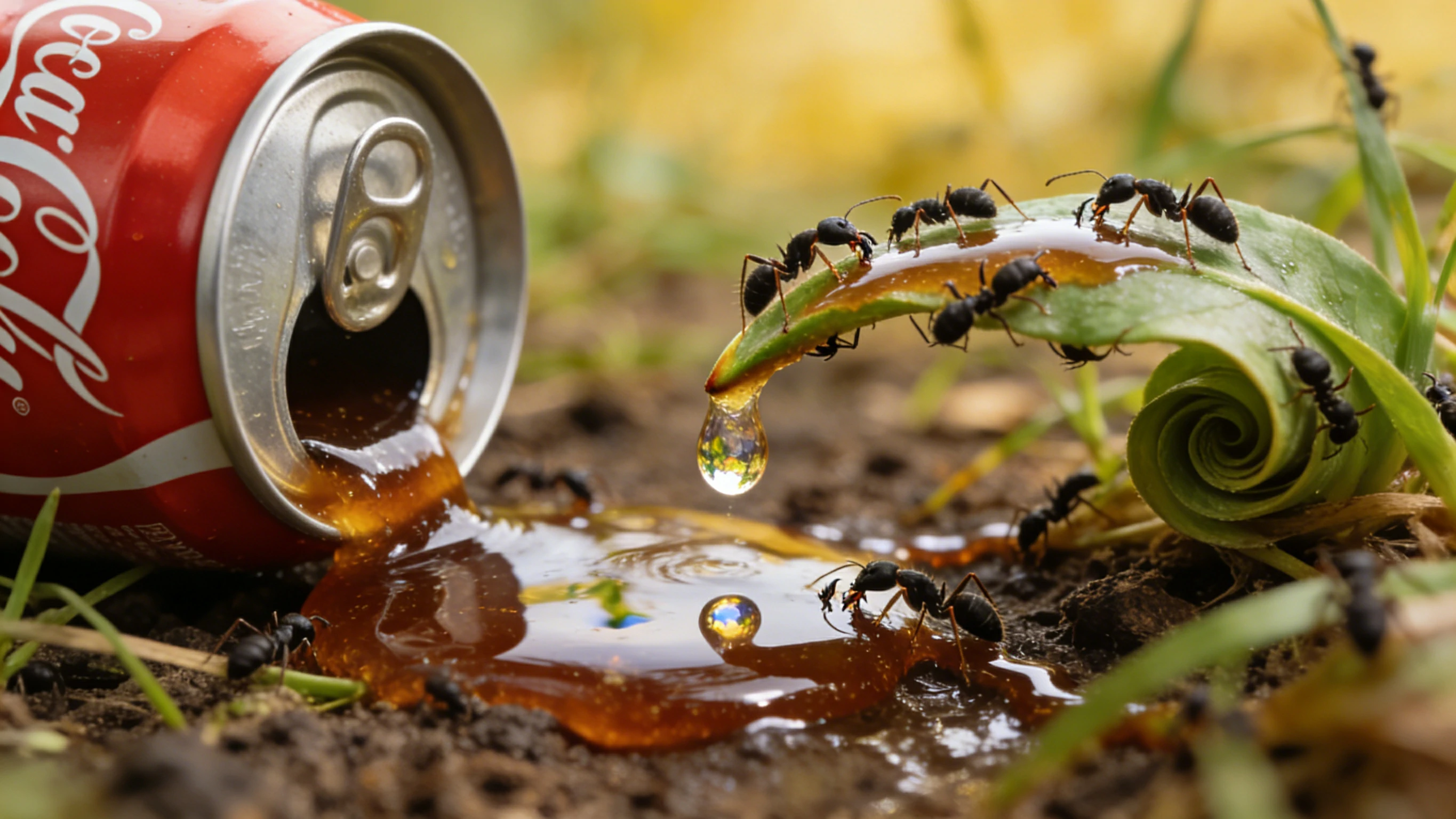
While the science explains why Coke can harm plants, significant practical limitations prevent it from being a reliable or recommended weed control strategy.
🌱 1. Non-Selective and Surface-Level Action
Coke will damage or kill any plant it touches, including your lawn, flowers, or vegetables. Its action is primarily contact-based, meaning it often kills only the top growth. The roots of many tough weeds (like dandelions or bindweed) frequently survive and resprout, making the treatment ineffective in the long term.
🐜 2. Unwanted Side Effects
The high sugar content is a major drawback. It attracts ants, wasps, flies, and other insects to your garden. The sticky residue left on pavement or leaves is unpleasant and can attract more dirt and mold. The sugar and acid can also negatively impact beneficial soil organisms and earthworms in the application area.
💰 3. Cost and Inefficiency
Considering the need for multiple applications on persistent weeds, using Coca-Cola can become an expensive way to control weeds compared to a dedicated, concentrated herbicide. It is also highly inefficient for treating large areas or numerous weeds.
Advertisements
Advertisements
You May Have Missed

Flight attendants share their most memorable travel experiences

This Elegant Country Cottage is Movable! Let’s Find out What’s Inside...