
5. Vinegar: The Multi-Purpose Organic Herbicide and Cleaning Agent
Advertisements
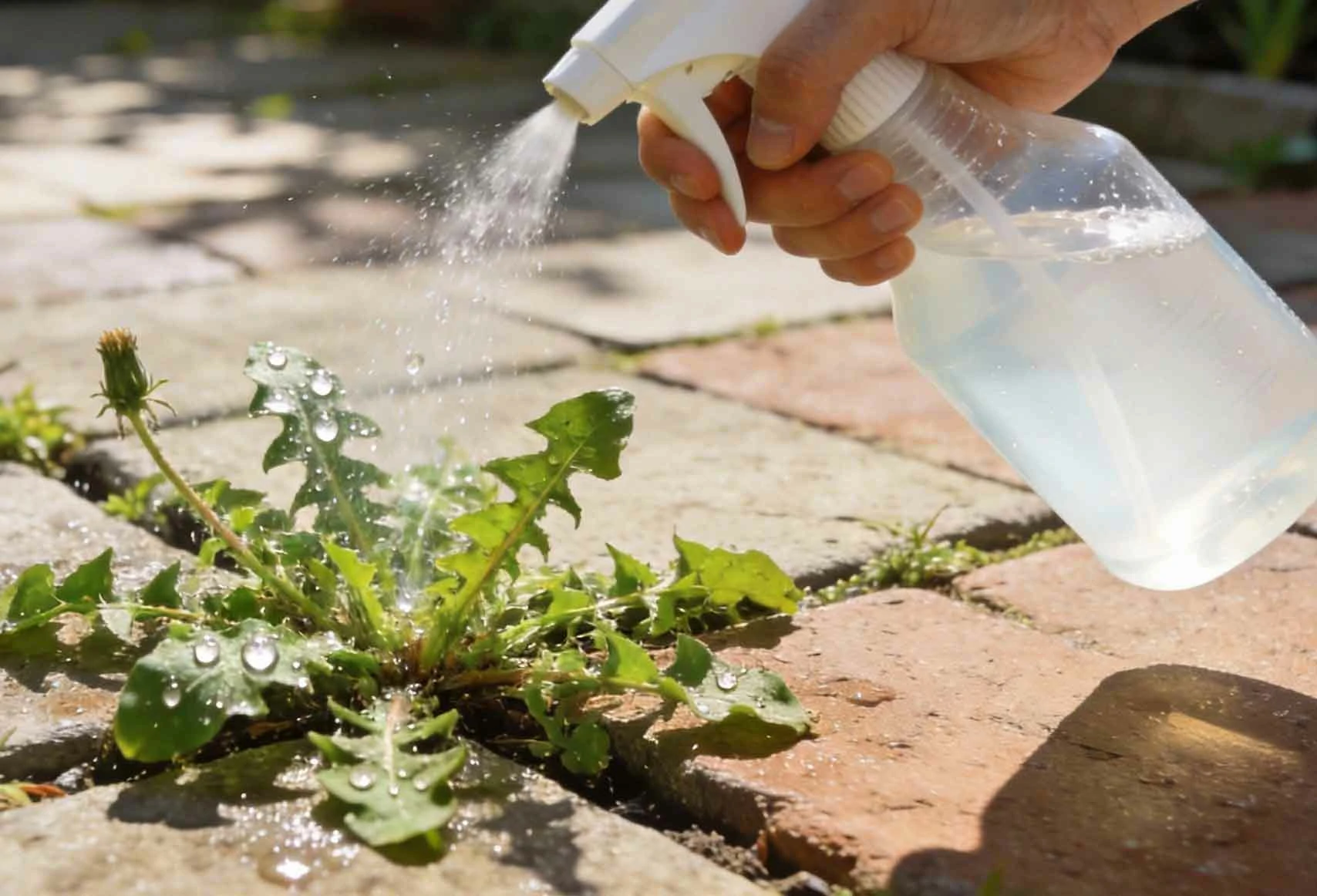
Standard household white vinegar (5% acetic acid) is a powerful, non-selective herbicide for targeted weed control. Horticultural vinegar (20-30% acetic acid) is more potent but must be handled with extreme care. For most garden purposes, household vinegar is sufficient and safer.
1. 🚫 Non-Selective Weed Killer for Patios and Paths
On a sunny, dry day, fill a spray bottle with undiluted white vinegar. Add a tablespoon of dish soap to help the solution stick to the weed's leaves. Spray directly onto the leaves of weeds growing in cracks on driveways, patios, or between paving stones. The acetic acid draws moisture out of the leaves, desiccating the plant. It is non-selective, so avoid spray drift onto desired plants. Multiple applications may be needed for perennial weeds.
2. 🧼 Cleaning Garden Tools and Pots
A solution of equal parts vinegar and water is excellent for cleaning clay pots, garden tools, and seed trays. Soak tools or scrub pots to remove mineral deposits, algae, and disease spores. Soaking rusty tools in vinegar can also help loosen rust. Rinse thoroughly afterwards. This disinfection helps prevent the spread of plant diseases.
3. 🌷 Deterring Furry Garden Invaders
Cats, rabbits, and other small animals often dislike the strong smell of vinegar. Soak old rags in a vinegar solution and place them around the perimeter of a garden bed or near specific plants you want to protect. Re-soak the rags after rain. This is a harmless way to encourage pests to forage elsewhere.
Advertisements
Advertisements
You May Have Missed

The waitress wrote a letter to her father without her mother's knowledge

Husband divorces wife after she gives birth to black child, her secret revealed 10 years later