
4. Sealing and Protecting Your Creations
Advertisements
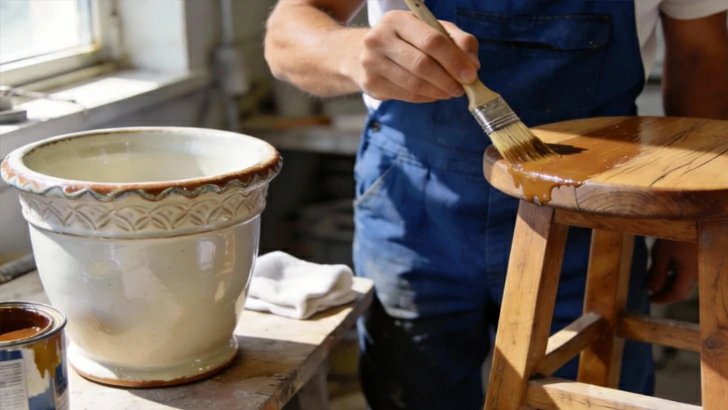
Since these items are intended for indoor or sheltered outdoor use, a protective topcoat is essential. It seals the paint, protects against moisture and UV rays, and makes the surfaces easy to clean, ensuring your hard work lasts for seasons to come.
1. Selecting the Right Protective Sealant
For outdoor or high-moisture environments, use a clear, exterior-grade polyurethane or a specialty outdoor sealant. For indoor use, a water-based polycrylic is a good low-odor option. Choose between matte, satin, or gloss finishes based on your desired look—matte often appears more natural for a planter, while satin offers a gentle sheen.
2. Application for Durability
Ensure both the planter and stool are completely dry and dust-free. In a ventilated area, apply the sealant with a clean brush or spray in light, even coats. Pay special attention to the rim of the planter and the top of the stool, as these are high-contact areas. Allow the first coat to dry fully as per instructions, then lightly sand with fine-grit sandpaper (e.g., 220-grit) and wipe clean before applying a second coat. This ensures a smooth, durable barrier.
5. Styling and Utilizing Your Upcycled Set
The final and most rewarding step is integrating your creations into your living space. This faux planter and stool set is incredibly versatile, offering numerous decorative possibilities that celebrate your creativity and sustainable efforts.
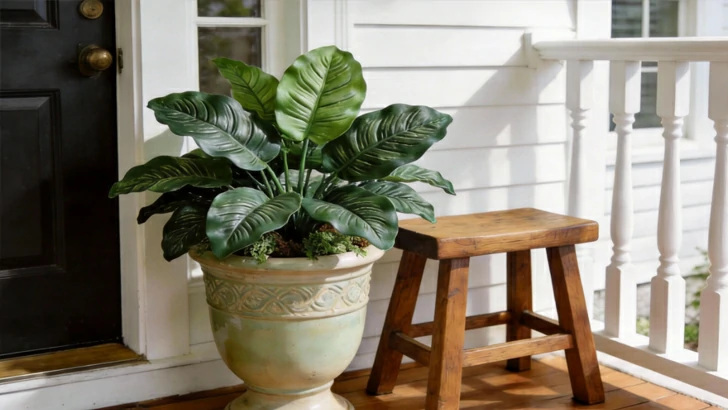
1. Creating a Convincing Faux Display
Since it's not a real planter, fill the can with materials to support artificial plants. Use floral foam, expanding spray foam, or even crumpled paper topped with moss. Arrange high-quality faux boxwoods, trailing ivy, or realistic-looking succulents. Tuck in ""dirt"" made from used coffee grounds or brown decorative moss around the stems for an ultra-realistic touch.
2. Ideal Placement for Maximum Impact
This set works beautifully flanking a front door as welcoming porch decor, on a sheltered patio to add greenery without maintenance, or in a sunroom where the faux plants look perpetually fresh. Place the stool next to the planter, or use it as a small side table. The uniform style creates a curated, intentional look.
3. Alternative Functional Uses
Think beyond the planter concept. The sealed trash can makeover can serve as a unique umbrella stand, a storage bin for outdoor cushions, or even a quirky ice bucket for parties. The stool, of course, remains functional as extra seating or a plant stand for real, potted herbs or flowers, creating a charming layered garden effect.
6. The Broader Impact of Creative Upcycling
This project is more than a weekend craft; it's a small act with meaningful implications. By choosing to upcycle, you actively participate in a more conscious and creative form of consumption.
1. Environmental Benefits: Reducing Waste
Every item repurposed is one less item in a landfill. Manufacturing new products consumes significant resources and energy. Upcycling extends the lifecycle of existing materials, dramatically reducing your carbon footprint and waste output, one project at a time.
2. Economic Advantages: High Style on a Low Budget
Upcycling is profoundly cost-effective. The base items are often inexpensive or free, and the supplies are minimal compared to buying new, high-end decorative pieces. You achieve a custom, personalized look for a fraction of the retail cost, proving that style doesn't have to be expensive.
3. Personal Satisfaction and Creative Expression
There is an immense sense of accomplishment in transforming something old into something new and beautiful. It fosters problem-solving skills, creativity, and a deeper connection to the objects in your home. Each piece tells a story of renewal and becomes a unique reflection of your personal style, impossible to find in any store.
Conclusion
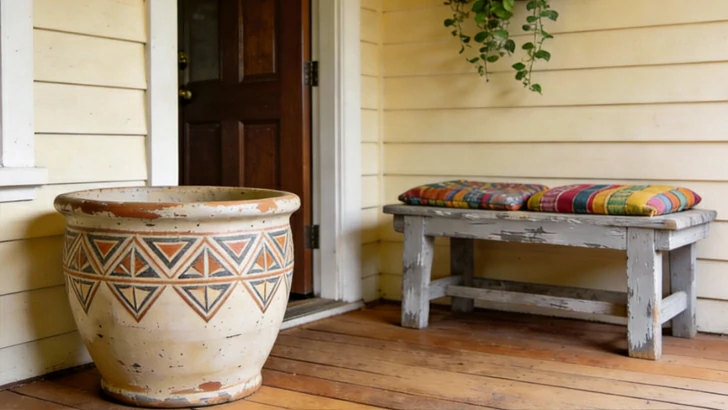
The journey of turning a discarded trash can and a forgotten stool into a delightful faux planter set encapsulates the true spirit of upcycling. It demonstrates that with vision, basic skills, and a commitment to sustainability, we can create beauty and function from the most unexpected sources. This project not only results in a unique decorative accent for your home but also serves as a tangible reminder of the power of creative reuse. We encourage you to look at the old, the plain, and the obsolete not as waste, but as raw material brimming with potential. Let this faux planter and stool makeover be the first of many projects that redefine value, reduce waste, and fill your space with personally crafted charm.
Advertisements
Advertisements
You May Have Missed

Husband divorces wife after she gives birth to black child, her secret revealed 10 years later

40 Breathtakingly Perfect Time-Lapse Photos